Top posts

Featured Posts

Claiming innocence using MACC's statement is a new new, says Daniel John Jambun


By Daniel John Jambun, 19-2-2025
I find it deeply troubling that Kemabong assemblyman Datuk Rubin Balang and Sindumin assemblyman Datuk Dr. Yusof Yacob have rushed to declare themselves “innocent” following the Malaysian Anti-Corruption Commission’s (MACC) decision to dismiss the allegations against them. Let me make this clear—it is not MACC Chief Commissioner Tan Sri Azam Baki who determines innocence. Only the court of law has the authority to declare someone free from guilt after hearing all the evidence.

The claim by these assemblymen that they had “no wrongdoing in terms of all activities” is completely misleading. The reality is that they have simply been let off the hook by Azam Baki’s double standards in law enforcement. It is undeniable that the MACC has aggressively pursued cases against certain individuals in the past based on similar leaked evidence. Why is this case being treated differently?

The dismissal of the leaked video as “heavily edited” and lacking credibility raises serious concerns. Was an independent forensic analysis conducted? Were the individuals involved subjected to further questioning? Were financial records examined? A thorough investigation involves more than just dismissing key evidence—it requires a comprehensive review of all supporting materials, including financial transactions, witness testimonies, and any related documents. Why was this not done?

Datuk Yusof Yacob’s attempt to redefine corruption by claiming it requires a visible donor, a recipient, and evidence of money being exchanged is both misleading and an insult to the intelligence of the public. Corruption investigations do not rely solely on catching transactions in real-time—they involve tracing illicit activities, improper dealings, and abuse of power that may not always be captured in a single video.

If Datuk Rubin Balang and Datuk Yusof Yacob are so confident in their innocence, then why not lodge a police report and sue the whistleblower for defamation? If the allegations are false, they should have nothing to fear. After all, they have Azam Baki as their prime witness to back them up. So, what’s stopping them? Their reluctance to take legal action against the whistleblower only raises further doubts about their claims of innocence.

Furthermore, with a MACC chief like Azam Baki leading the country’s anti-corruption efforts, it is no surprise that Malaysia has topped the list of the most corrupt countries in the world in 2023. His leadership has only reinforced the public perception that corruption is not only tolerated but also protected when it involves certain individuals. This blatant disregard for transparency and accountability is exactly why Malaysia continues to struggle with systemic corruption.

The public must ask—if these assemblymen are truly innocent, why are they so eager to close the case instead of supporting a full, impartial investigation? If there is truly no wrongdoing, an open, transparent legal process should clear them, not a selective statement from the MACC.

This is yet another example of selective investigation and political favoritism by MACC under Azam Baki’s leadership. The people of Sabah and Malaysia deserve an anti-corruption body that enforces the law fairly, not one that shields certain individuals while selectively targeting others.

I call upon the MACC to reopen the investigation, allow an independent forensic review of the evidence, and ensure that all individuals involved are held accountable through due process in the court of law. Anything less is a betrayal of justice and the trust of the rakyat.

Whatever it is, the court of public opinion will make their own judgment and deliver their verdict in this coming Sabah state election to be held this year.

Daniel John Jambun is President of Borneo`s Plight in Malaysia Foundation (BoPiMaFo).


Versi bahasa Melayu :

Kenyataan Akhbar
19 Februari 2025

Mendakwa Tidak Bersalah melalui Siasatan Terpilih SPRM dan Standard Berganda

Saya mendapati amat membimbangkan apabila Ahli Dewan Undangan Negeri (ADUN) Kemabong, Datuk Rubin Balang dan ADUN Sindumin, Datuk Dr. Yusof Yacob tergesa-gesa mengisytiharkan diri mereka sebagai “tidak bersalah” selepas Suruhanjaya Pencegahan Rasuah Malaysia (SPRM) memutuskan untuk menolak dakwaan terhadap mereka. Saya ingin menjelaskan satu perkara—bukan Ketua Pesuruhjaya SPRM, Tan Sri Azam Baki, yang menentukan seseorang itu tidak bersalah. Hanya mahkamah yang berhak mengisytiharkan seseorang bebas daripada kesalahan selepas semua bukti dikemukakan dan dibicarakan.

Dakwaan oleh kedua-dua ADUN ini bahawa mereka “tidak melakukan sebarang kesalahan dalam semua aktiviti” adalah sangat mengelirukan. Hakikatnya, mereka hanya dilepaskan kerana standard berganda dalam penguatkuasaan undang-undang oleh Azam Baki. Tidak dapat dinafikan bahawa SPRM sebelum ini telah bertindak agresif dalam menyiasat individu lain berdasarkan bukti yang bocor. Mengapa kes ini dilayan secara berbeza?

Penolakan video bocor sebagai “suntingan berat” dan tidak mempunyai kredibiliti menimbulkan persoalan serius. Adakah analisis forensik bebas telah dijalankan? Adakah individu yang terlibat telah disoal siasat dengan lebih lanjut? Adakah rekod kewangan diperiksa? Siasatan yang menyeluruh memerlukan lebih daripada sekadar menolak bukti utama—ia perlu melibatkan semakan terperinci terhadap semua bahan sokongan, termasuk transaksi kewangan, keterangan saksi, dan dokumen berkaitan. Mengapa semua ini tidak dilakukan?

Percubaan Datuk Yusof Yacob untuk mentakrifkan rasuah sebagai sesuatu yang hanya boleh dibuktikan dengan kewujudan penderma, penerima, serta bukti pertukaran wang adalah satu penyelewengan fakta dan penghinaan terhadap kecerdikan rakyat. Siasatan rasuah tidak semata-mata bergantung kepada tangkapan secara langsung dalam transaksi—ianya melibatkan penjejakan aktiviti haram, urus niaga yang mencurigakan, dan penyalahgunaan kuasa yang mungkin tidak sentiasa dapat dirakam dalam satu video.

Jika Datuk Rubin Balang dan Datuk Yusof Yacob begitu yakin dengan kejujuran mereka, mengapa mereka tidak membuat laporan polis dan menyaman pemberi maklumat atas fitnah? Jika dakwaan itu tidak benar, mereka tidak mempunyai sebab untuk takut. Lagipun, mereka mempunyai Azam Baki sebagai saksi utama untuk menyokong mereka. Jadi, apa yang menghalang mereka? Keengganan mereka untuk mengambil tindakan undang-undang terhadap pemberi maklumat hanya menimbulkan lebih banyak keraguan terhadap dakwaan mereka bahawa mereka tidak bersalah.

Tambahan pula, dengan seorang Ketua SPRM seperti Azam Baki yang mengetuai usaha membanteras rasuah di negara ini, tidak mengejutkan apabila Malaysia tersenarai sebagai antara negara paling korup di dunia pada tahun 2023. Kepimpinannya hanya mengukuhkan persepsi rakyat bahawa rasuah bukan sahaja dibenarkan tetapi turut dilindungi apabila melibatkan individu tertentu. Sikap tidak peduli terhadap ketelusan dan akauntabiliti inilah yang menyebabkan Malaysia terus bergelut dengan masalah rasuah sistemik.

Rakyat perlu bertanya—jika benar ADUN-ADUN ini tidak bersalah, mengapa mereka begitu tergesa-gesa mahu menutup kes ini daripada menyokong siasatan penuh dan tidak berat sebelah? Jika benar tiada kesalahan dilakukan, proses undang-undang yang terbuka dan telus seharusnya membersihkan nama mereka, bukannya kenyataan terpilih daripada SPRM.

Ini sekali lagi merupakan contoh siasatan terpilih dan layanan istimewa oleh SPRM di bawah kepimpinan Azam Baki. Rakyat Sabah dan Malaysia berhak mendapat sebuah badan anti-rasuah yang melaksanakan undang-undang dengan adil, bukan yang melindungi individu tertentu sambil menyasarkan yang lain.

Saya menggesa SPRM untuk membuka semula siasatan, membenarkan semakan forensik bebas terhadap bukti, dan memastikan semua individu yang terlibat dihadapkan ke muka pengadilan melalui proses perundangan yang sewajarnya. Sebarang tindakan kurang daripada ini adalah satu pengkhianatan terhadap keadilan dan kepercayaan rakyat.

Apa pun, mahkamah pendapat umum akan membuat keputusan mereka sendiri dan memberikan hukuman dalam pilihan raya negeri Sabah yang bakal diadakan tahun ini.

Daniel John Jambun
Presiden
Borneo’s Plight in Malaysia Foundation (BoPiMaFo)#

Who actually owns Gaza and West Bank?


By Leonard Grunstein, 18-2-2025
AS I viewed the recent press conference with Jordanian King Abdullah II and President Donald Trump, I couldn’t help but reflect on the history of Jordan and the king’s namesake and great-grandfather, Abdullah I. 

After Jordan illegally conquered Judea and Samaria, including the eastern portion of Jerusalem, in 1948, it sought to legitimize its conquest of these areas, which it proceeded to rename the West Bank of Jordan.

On Dec. 1, 1948, it organized a conference in the town of Jericho that was attended by representatives of numerous constituencies within these areas. Among them were the mayors of Hebron and Bethlehem, and together with the other attendees adopted what became known as the Jericho Resolutions. The proposals confirmed the desire of the Arab residents of the so-called West Bank to be immediately annexed to Jordan. Subsequent conferences occurred in Ramallah and then Nablus, which declared their support for the resolutions.

The Arab residents of the so-called West Bank participated in the Jordanian Parliamentary elections of April 1950 and were equally represented in the parliament. On April 24, 1950, the newly elected parliament, noting it represented both the eastern bank of the Jordan as well as the western one, formally approved the annexation of the areas of Judea and Samaria conquered by Jordan, including the eastern part of Jerusalem. It unified them into the single state of Jordan, as confirmed by the then-king of Jordan, Abdullah I.

The Palestinian Liberation Organization (PLO) recognized Jordan’s sovereignty over these areas. It expressly provided in Article 24 of its original Charter of 1964 that it exercised no sovereignty over the West Bank that belonged to Jordan. Interestingly, it also expressly declared it exercised no sovereignty over Gaza. Its professed twin goals were Arab unity and the destruction of Israel.

Therefore, whatever rights Arab residents of Judea, Samaria and eastern Jerusalem may have had to assert any claim to sovereignty over these areas were fully vested in Jordan. Even the PLO acknowledged that these rights were ceded to Jordan.

Like any other sovereign state, Jordan could negotiate and barter away the sovereignty over any of its land. Thus, when it entered into a Treaty of Peace, dated Oct. 26, 1994, with the State of Israel and, in Article 3, demarcated the international boundary between Israel and Jordan as the Jordan River, it effectively ceded sovereignty over its former western bank to Israel.

In this regard, the provisions of Article 2, Section 1, are particularly cogent. It requires each party to recognize and respect the other’s sovereign territorial integrity and political independence. Thus, Jordan recognized Israel’s sovereignty over the land within its borders, which is demarcated as the Jordan River by the treaty, as noted above. Section 2 of Article 3 of the Treaty declares this boundary is the permanent, secure and recognized international border between Israel and Jordan. There is no explicit carve-out for any claim of sovereignty by the so-called Palestinians to the West Bank.

The Treaty, in Section 3 of Article 3, goes on to say the parties recognize the international boundary and each other’s territory, territorial waters and airspace as inviolable, and agree to respect and comply with them. Furthermore, Section 6 of Article 3 provides that each party is to deploy on its side of the international boundary upon the exchange of the instruments of ratification of the treaty, which occurred during King Hussein’s first official visit to Israel, on Nov. 1, 1994 (after approval by the Israeli Knesset and ratification by Jordan’s Chamber of Deputies). Once again, it should be noted that these sovereign rights are not made subject to or otherwise expressly qualified by any claims of the so-called Palestinians.

Moreover, under the Jordanian Nationality Law of 1954, any person who possessed Palestinian nationality (other than Jews) before May 15, 1948, and was a regular resident in the Hashemite Kingdom of Jordan between Dec. 20, 1949 and Feb. 16, 1954—or whose father holds Jordanian nationality—is deemed to be a Jordanian national. Notice the express exception for Jews.

The Israeli victory over Jordan in 1967 enabled Israel to liberate Judea and Samaria. Under international law, as embodied in the 1920 San Remo Declaration—unanimously adopted by the League of Nations in 1922 and reconfirmed by the 1924 Anglo-American Treaty—it was and shall remain an integral part of Israel. Jews began once again to live in Judea and Samaria, as they were legally entitled to do historically and under these foundational international treaties and laws. 

While Jordan has been making efforts since 1988 to revoke the citizenship of many of its citizens living in Judea and Samaria, it is not at all clear that this is legally permissible. Furthermore, there appears to be no legal impediment to reinstating the citizenship purportedly revoked.

It’s time for King Abdullah II to allow his citizens to come home and resettle in Jordan proper. The charade of governance by members of the PLO, Popular Front for the Liberation of Palestine, Hamas and the alphabet soup of other organizations that purport to comprise the terrorist-supporting kleptocracy, known as the Palestinian Authority, must be ended. “Pay for slay” is just one example of how nothing has changed. It’s all just clever window-dressing. The P.A. doesn’t want to live side by side in peace with the Jewish State of Israel but to destroy it.

It is delusional to believe otherwise and those who ignore reality do so at their peril. Whether Hamas in Gaza, the P.A. in Judea and Samaria, or Hezbollah in Lebanon, the terrorist threat is real and abiding. Wishing it away or pretending it doesn’t exist is not a real plan of action. It’s time to overcome the challenge by eliminating the source of the problem.#

The opinions and facts presented in this article are those of the author, and neither Jewish News Services nor its partners assume any responsibility for them.


Sabah mineral mining case, a betrayal by the power that be

By Daniel John Jambun, 18-2-2025
THE claim that Chief Minister Datuk Hajiji Noor and his government have dismantled a so-called cartel conspiracy to rob Sabah’s resources is nothing more than a smokescreen to divert attention from the real issue.

The real issue is why the Chief Minister failed to tender out the Prospecting Licenses (PLs) and mining concessions to the highest bidder in a transparent process. If these licenses and concessions had been fairly awarded through an open competitive bidding system, the state and its people would have received maximum financial benefit from their own natural resources.

Instead, these lucrative PLs and concessions were handed out to assemblymen, raising serious concerns about political bribery, abuse of power, and corruption. This was not about good governance—it was about using Sabah’s resources as political leverage to secure loyalty and consolidate power.

Political Bribery & Irresponsibility

1. Assemblymen were granted valuable PLs and concessions as incentives to defect to the ruling party.

2. A video clip has surfaced showing assemblymen receiving money in exchange for these PLs and concessions.

3. While the Chief Minister revoked cartel-linked licenses, those who received money in return for these PLs and concessions must return it. Anything less is outright irresponsible and amounts to fraud.

The people of Sabah do not oppose the awarding of PLs and concessions to foreign companies—provided they are the highest bidder in a fair and transparent process. The issue is not about who gets the licenses, but about how they are awarded. Any decision regarding Sabah’s resources must prioritize the best financial return for the state and its people, not the political survival of a few leaders.

The Court of Public Opinion Will Decide

MACC Chief Commissioner Azam Baki has stated that the video clip showing assemblymen receiving money is heavily edited and cannot be used as legal evidence.

This statement, however, is a blessing in disguise—because the issue is now in the hands of the court of public opinion. And this court will deliver its verdict in the coming Sabah State Election.

The people of Sabah are not blind. They see the manipulation, the political bribery, and the abuse of state resources for power consolidation. And when the time comes, they will decide the outcome at the ballot box.

A Call for Immediate Transparency and Accountability

We demand the following:

1. Immediate Disclosure of All PL and Concession Agreements – The public has the right to know who received these licenses, how they were awarded, and under what conditions.

2. The Return of All Illegally Obtained Funds – Any assemblyman who accepted money in exchange for PLs or concessions must immediately return it. Keeping the money while claiming innocence is both irresponsible and deceitful.

3. Implementation of a Transparent Open Tender System – All future PLs and concessions must go through a competitive bidding process, ensuring that the highest bidder wins and the people of Sabah receive the maximum benefit.

4. Legislative Reforms to Prevent Political Exploitation of State Resources – There must be legal safeguards to stop the misuse of state assets for political survival.

Sabah’s resources belong to the people, not to a handful of privileged politicians. The Chief Minister and his government cannot claim to have ended corruption while allowing those who profited from this scheme to keep their ill-gotten gains.
This will not be forgotten. The people of Sabah will hold those responsible accountable at the ballot box.

We demand accountability. We demand transparency. We demand justice.

Daniel John Jambun is a Sabah activist.


Versi bahasa Melayu:


RASUAH DALAM PERLOMBONGAN MINERAL SABAH (SMM): PENGKHIANATAN TERHADAP KEPERCAYAAN AWAM

Oleh Daniel John Jambun, 18-2-2025
Dakwaan bahawa Ketua Menteri Datuk Hajiji Noor dan kerajaannya telah membongkar konspirasi kartel untuk merompak sumber Sabah tidak lebih daripada satu helah untuk mengalihkan perhatian daripada isu sebenar.

Isu sebenar adalah mengapa Ketua Menteri gagal membuka tender bagi Lesen Prospek (PL) dan konsesi perlombongan kepada pembida tertinggi melalui proses yang telus. Sekiranya lesen dan konsesi ini diberikan secara adil melalui sistem bidaan terbuka yang kompetitif, negeri dan rakyat Sabah akan memperoleh manfaat kewangan maksimum daripada sumber semula jadi mereka sendiri.

Sebaliknya, lesen PL dan konsesi yang menguntungkan ini telah diberikan kepada wakil rakyat, menimbulkan kebimbangan serius mengenai rasuah politik, penyalahgunaan kuasa, dan amalan korupsi. Ini bukan soal tadbir urus yang baik—tetapi tentang bagaimana sumber Sabah digunakan sebagai alat politik untuk mendapatkan kesetiaan dan mengukuhkan kuasa.

Rasuah Politik & Ketidakbertanggungjawaban

Wakil rakyat diberikan PL dan konsesi bernilai tinggi sebagai insentif untuk berpaling tadah ke parti pemerintah.

Satu rakaman video telah muncul yang menunjukkan wakil rakyat menerima wang sebagai pertukaran bagi PL dan konsesi ini.

Walaupun Ketua Menteri telah membatalkan lesen yang dikaitkan dengan kartel, mereka yang menerima wang sebagai balasan untuk PL dan konsesi mesti memulangkannya. Jika tidak, ia adalah satu tindakan yang tidak bertanggungjawab dan satu bentuk penipuan.

Rakyat Sabah tidak menentang pemberian PL dan konsesi kepada syarikat asing—dengan syarat mereka adalah pembida tertinggi dalam satu proses yang adil dan telus. Isunya bukan siapa yang mendapat lesen, tetapi bagaimana ia diberikan. Setiap keputusan mengenai sumber Sabah mesti mengutamakan pulangan kewangan terbaik untuk negeri dan rakyatnya, bukan kelangsungan politik segelintir pemimpin.

Mahkamah Pendapat Umum Akan Menentukan

Ketua Pesuruhjaya SPRM, Azam Baki, telah menyatakan bahawa rakaman video yang menunjukkan wakil rakyat menerima wang telah disunting dengan berat dan tidak boleh dijadikan bukti sah di mahkamah.

Namun, kenyataan ini adalah satu hikmah tersembunyi—kerana isu ini kini berada di tangan mahkamah pendapat umum. Dan mahkamah ini akan memberikan keputusannya dalam Pilihan Raya Negeri Sabah yang akan datang.

Rakyat Sabah tidak buta. Mereka melihat manipulasi, rasuah politik, dan penyalahgunaan sumber negeri untuk mengukuhkan kuasa. Dan apabila tiba masanya, mereka akan menentukan keputusan di peti undi.

Tuntutan Segera untuk Ketelusan dan Kebertanggungjawaban

Kami menuntut perkara berikut:

Pendedahan Segera Semua Perjanjian PL dan Konsesi – Rakyat berhak mengetahui siapa yang menerima lesen ini, bagaimana ia diberikan, dan di bawah syarat apa.

Pemulangan Segera Semua Dana yang Diperoleh Secara Tidak Sah – Mana-mana wakil rakyat yang menerima wang sebagai pertukaran untuk PL atau konsesi mesti segera memulangkannya. Menyimpan wang tersebut sambil mendakwa tidak bersalah adalah tindakan yang tidak bertanggungjawab dan tidak jujur.

Pelaksanaan Sistem Tender Terbuka yang Telus – Semua PL dan konsesi pada masa hadapan mesti melalui proses bidaan kompetitif, memastikan pembida tertinggi menang dan rakyat Sabah memperoleh manfaat maksimum.

Reformasi Perundangan untuk Menghalang Penyalahgunaan Sumber Negeri bagi Kepentingan Politik – Mesti ada perlindungan undang-undang bagi menghentikan penyalahgunaan aset negeri demi kelangsungan politik.

Sumber Sabah adalah milik rakyat, bukan milik segelintir ahli politik yang berkuasa. Ketua Menteri dan kerajaannya tidak boleh mendakwa telah menamatkan rasuah sambil membiarkan mereka yang mendapat keuntungan daripada skim ini menyimpan hasil haram mereka.

Ini tidak akan dilupakan. Rakyat Sabah akan menuntut pertanggungjawaban di peti undi.

Kami menuntut pertanggungjawaban. Kami menuntut ketelusan. Kami menuntut keadilan.#

Gindol Initiative for Civil Society Borneo among 10 NGOs who calls for review on power of Public Prosecutor

Dr Kanul Gindol, is the founding chairman of Gindol Initiative for Civil Society Borneo.


Allow judicial review over PP's decision, say NGOs

As reported by the Malaysiakini, 16-2-2025

Summary
  • Several NGOs urge the government to amend the Federal Constitution to allow judicial review of the public prosecutor’s decisions on initiating, discontinuing or not pressing charges in court.

  • This is to allow the court to decide whether the public prosecutor’s decision is valid or otherwise.

  • NGOs also urge the government to expedite the separation of the Attorney-General’s Chambers from the public prosecutor.


Several NGOs have urged the government to amend the Federal Constitution to allow judicial review of the public prosecutor’s decisions on initiating, discontinuing or not pressing charges in court.

“We also call for the right of judicial review of decisions of a public prosecutor, just as we already have the right to go for judicial review of the prime minister or minister’s decisions.

“This will allow the court to consider whether the public prosecutor’s decision was illegal, procedurally unfair, irrational or even incompatible with human rights.

“It will ensure no wrongdoing or abuse of power by the public prosecutor, who represents Malaysia and the people in the administration of criminal justice,” they said in a joint statement today.

Among the NGOs which signed the statement were Malaysians Against Death Penalty and Torture, Center for Orang Asli Concerns, Gindol Initiative for Civil Society Borneo, Parti Rakyat Malaysia and Aliran.

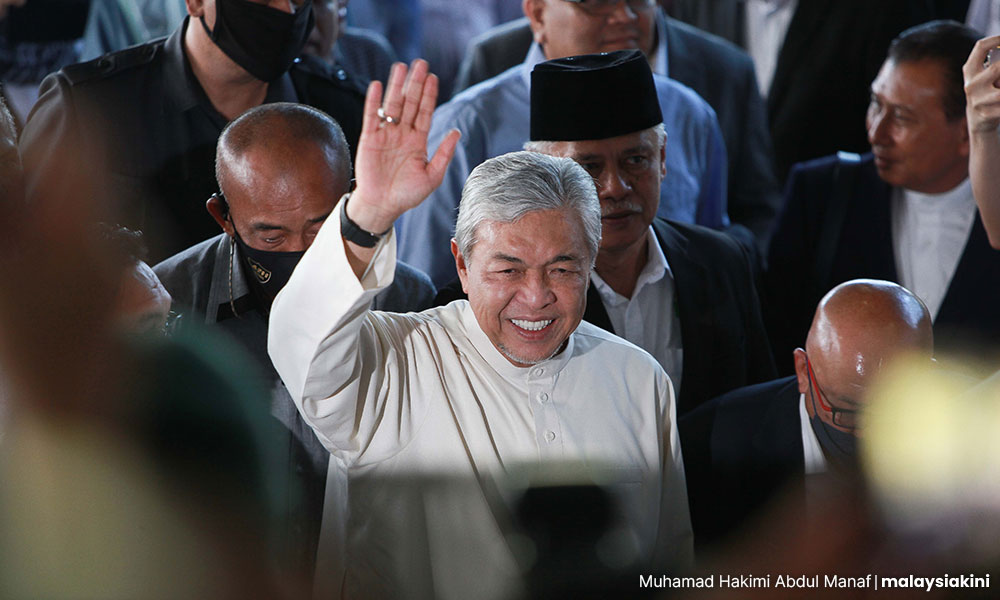
On Sept 4, 2023, Deputy Prime Minister Ahmad Zahid Hamidi was granted a discharge not amounting to an acquittal (DNAA) of the corruption case involving millions of ringgit from Yayasan Akalbudi.

The deputy public prosecutor said the DNAA bid is based on 10 or 11 reasons, among them to allow a more comprehensive and complete investigation into Zahid's case.

Deputy Prime Minister Ahmad Zahid Hamidi

This came despite the High Court ordering Zahid to enter his defence on Jan 24, 2022, after the prosecution established a prima facie case against the Bagan Datuk MP.

On Dec 17 last year, the Court of Appeal ruled against an activist’s application to commence private prosecution against two Muslim preachers who purportedly insulted non-Islamic religions and practices.

Global Human Rights Federation president S Shashi Kumar, who is the applicant, said the court cited Article 145 of the Federal Constitution to reject his application.

“They (the judge) said we cannot proceed with the private prosecution because of Article 145, because the attorney-general holds the executive power to decide whether they (the prosecution) want to proceed with a particular case or otherwise.

“Article 145(3) gives them the full power and we cannot question that," he was reported as saying.

Expedite separation of offices

On that note, the NGOs urged the government to expedite its plan to separate the Attorney-General’s Chambers from the public prosecutor’s office.

They said this is to ensure there is no longer a perception that the public prosecutor is acting on the instruction of the prime minister or the government.

“Prime Minister Anwar Ibrahim has recognised that the separation of powers between AG and the public prosecutor is not merely a division of responsibilities, but a crucial step in preserving the integrity of the office.

“And he has mentioned that a cabinet draft paper on the matter is expected to be ready by the middle of 2025.

“We hope the needed amendments to the Federal Constitution and relevant laws be tabled in Parliament soon, and that Malaysia will finally have an independent public prosecutor and AG by the third quarter of this year,” they added.

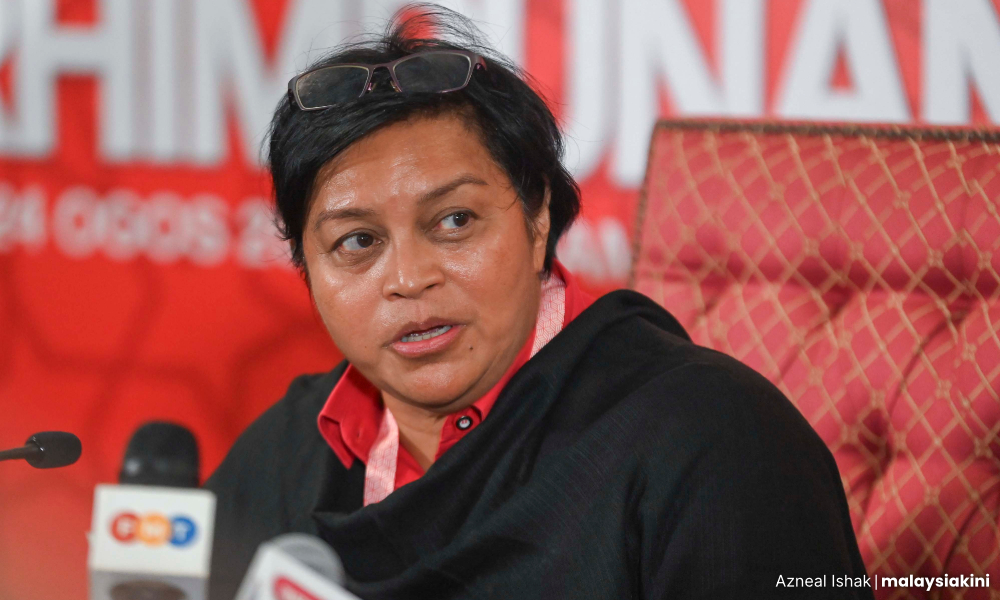
Minister in the Prime Minister’s Department (Law and Institutional Reform) Azalina Othman Said

On May 8 last year, Minister in the Prime Minister’s Department (Law and Institutional Reform) Azalina Othman Said went to Ottawa, Canada to conduct a detailed study on the plan to separate both offices.

"The Malaysian delegation is scheduled to attend a series of important meetings with Canadian government senior officials and to exchange views and share information and knowledge, especially in their valuable experience in successfully implementing the separation of powers of the AGC and the public prosecutor’s office almost 20 years ago," she said. -Malaysiakini, 15/2/2025


A failing Umno-Warisan collaboration; difficult to work out


Below is a paper sighted by Borneo Herald, outlining a proposal, most likely from a party that wants to see Warisan and Umno work together, to defeat the GRS+PH Sabah state government at the impending state election. This, however, was shot down by Warisan's information chief, Azis Zaman, who claimed his party will not collaborate with Umno for the election. The paper cannot be said though as a possible co-operation between BN and Warisan. At best it is between Umno and Warisan only as BN's other component parties like PBRS and MCA are not in the equation. This, however could serve as a guideline as to where Umno is very keen to contest, and hopes Warisan to give way.. Editor


Key Points and Facts:

1. BN Sabah and Warisan Negotiation:

Both parties are in discussions to reach a compromise for 50 out of 73 state assembly seats in the upcoming Sabah state election (PRN Sabah).

The discussion involves a quid pro quo strategy where they will not contest against each other in these selected seats.


2. Status of the Negotiation:

As of February, BN Sabah Chairman Datuk Seri Bung Moktar Radin and Warisan President Datuk Seri Mohd Shafie Apdal have held multiple meetings.

Both parties conducted separate research and studies to evaluate their winning chances.

It is not an official alliance but rather a political compromise to strengthen both parties' positions in the election.


3. Nature of the Compromise:

No joint campaign or manifesto will be involved.

Supporters of both parties in the agreed-upon seats will be encouraged to vote for the mutually selected candidate.

In the remaining 23 seats, both parties are free to contest without compromise.


4. Seat Distribution in the Discussion:

The 50 seats are expected to be split roughly 25-30 seats for UMNO and 25-30 seats for Warisan.

UMNO’s Proposal:

Warisan should give way in 25 seats, including 14 seats won by BN Sabah in the last PRN and 11 seats currently held by Parti Gagasan Rakyat Sabah (GAGASAN), which were previously won by Bersatu or independents.

BN does not want to cooperate with GAGASAN, as the party wants to contest in seats where BN’s elected representatives switched allegiance to GAGASAN.


5. BN’s 14 Seats Won in the Last PRN:

N.02 Bengkoka (Harun Durabi)

N.09 Tempasuk (Mohd Arshad bin Bistari)

N.10 Usukan (Datuk Salleh Said Keruak)

N.13 Pantai Dalit (Jasnih Daya)

N.16 Karambunai (Datuk Yakub Khan)

N.24 Tanjung Keramat (Ir Shahelmey Yahya)

N.29 Pantai Manis (Mohd Tamin bin Zainal)

N.48 Sugut (Datuk James Ratib)

N.51 Sungai Manila (Mokran Ingkat)

N.52 Sungai Sibuga (Hj Mohamad Hamsan)

N.58 Lamag (Datuk Bung Moktar Radin)

N.59 Sukau (Datuk Jafry Arifin)

N.67 Balung (Hamild @Hamid Awang)

N.71 Tanjung Batu (Andi Muhammad Suryady)


6. UMNO’s Concerns with GAGASAN:

GAGASAN wants to field candidates in BN's previously won seats, including Sugut, Pantai Dalit, Tempasuk, and Balung.

GAGASAN is also pushing for BN to nominate Ir Shahelmey in Tanjung Keramat, despite him being suspended from UMNO.


7. BN’s Proposed 11 Additional Seats Where Warisan Should Not Contest:

Pitas

Pintasan

Paginatan

Liawan

Klias

Nabawan

Labuk

Apas

Kuala Penyu

Kemabong

Kuamut


8. BN’s Offer in Return:

BN/UMNO will not contest in 26 seats won by Warisan in the last PRN, including:

Banggi, Darau, Likas, Luyang, Tanjung Aru, Petagas, Kepayan, Moyog, Limbahau, Bongawan, Sindumin, Melalap, Sekong, Karamunting, Elopura, Tanjung Papat, Tungku, Segama, Silam, Kunak, Sulabayan, Senallang, Bugaya, Sri Tanjong, Merotai, and Sebatik.


9. Controversy Over Two Key Seats:

Gum Gum and Kukusan are disputed areas where BN lost by 269 votes and 10 votes to Warisan, respectively.

BN is keen on contesting these seats as they consider them their traditional strongholds.


Summary:

BN Sabah and Warisan are negotiating a seat-sharing deal in 50 out of 73 state assembly constituencies.

The agreement would prevent direct competition in these seats while not forming an official coalition.

BN wants Warisan to give way in 25 seats, while BN would reciprocate by not contesting in 26 Warisan-held seats.

There are disagreements over certain constituencies, including Gum Gum and Kukusan.

The deal excludes GAGASAN, reflecting BN’s reluctance to cooperate with them.


This compromise, if successful, could significantly impact the political landscape in the upcoming PRN Sabah.

Search This Blog